
FloatRider
Turbulence Module for Profiling Floats
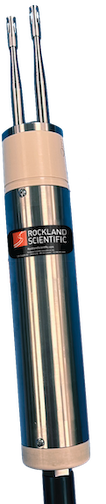
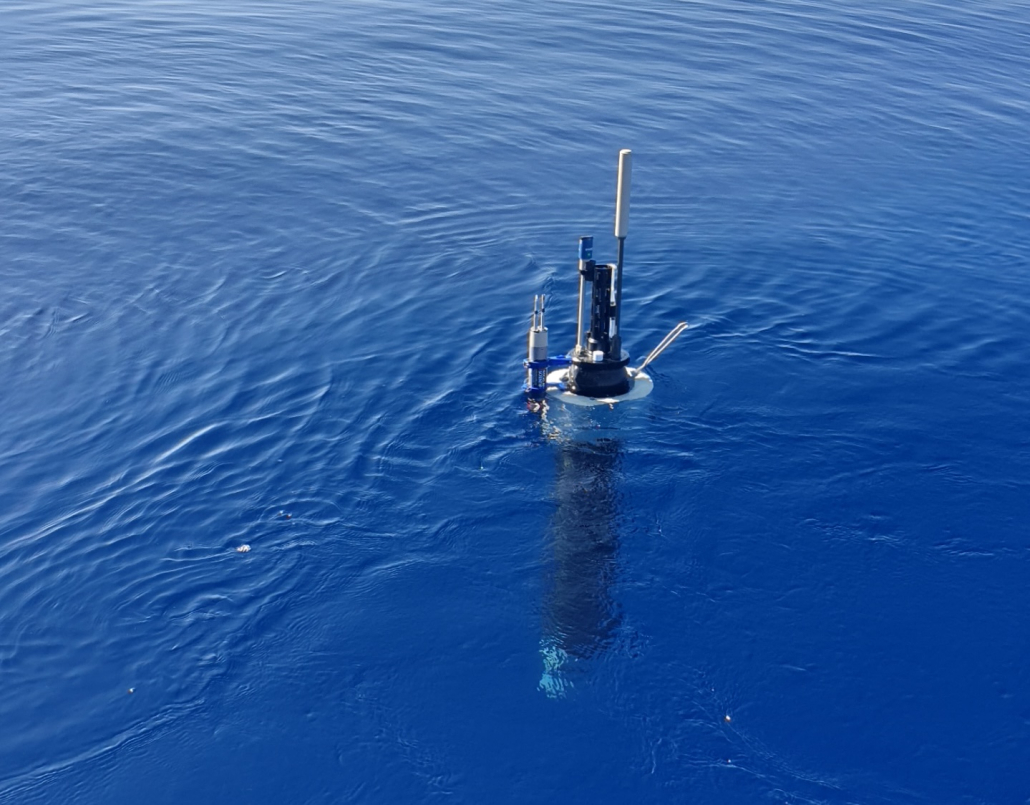
The FloatRider is a sensor package designed to integrate onto profiling floats, providing persistent direct measurements of micro-scale turbulence autonomously. The FloatRider allows scientists to capture accurate microstructure turbulence data in the upper 2 000 m of the ocean, even under challenging conditions. When combined with Rockland’s onboard data processing, these floats can deliver near real-time band averaged spectra. Compact, and easy to integrate, the FloatRider is an essential tool for advancing oceanographic research.
Features:
- Low Power: 230 mW
- Fast Sample Rate: 256 Hz (optional rate up to 512 Hz)
- Depth rating: 2 000 m
- In-situ Data Processing (ISDP)
- Band-averaged spectra: Provides for low bandwidth telemetry of turbulence spectra
- 2x microstructure probes*: Micro-temperature + Micro-temperature
* Shear probes available, contact Rockland directly.
Applications
The FloatRider is an ideal solution for studying ocean mixing, ocean-atmosphere interactions, heat transfer and fluxes of energy, oxygen and nutrients, providing insights into processes related to global climate change. As the FloatRider is integrated on profiling floats, it can be paired with a suite of other sensors, including multiple biogeochemical parameters to better understand those variables more directly. Deploying turbulence sensors on floats provides direct and cost-effective measurements of mixing at better spatial and temporal resolutions; not many platforms can measure in these depths. As mixing and heat flux are crucial to understanding climate change, using the FloatRider on profiling floats is a powerful solution for persistent measurements.
Further information
Download detailed specifications here: FloatRider Data Sheet

Engineering drawing of FloatRider with shipping guard installed to protect probes