Happy Holidays: Office closed from December 26-30

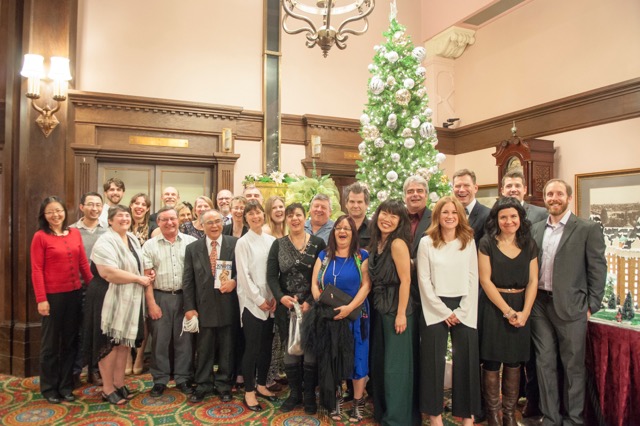
Please be advised that the Rockland Scientific office will be closed between December 26th to the 30th 2016. Everyone at Rockland wishes you a joyous holiday season especially if you find yourself at sea during this time.

If you require support over the holidays please do not hesitate to contact support@rocklandscientific.com. We will respond promptly to any inquiries.

Happy Holidays from everyone at Rockland Scientific International

Happy Halloween!

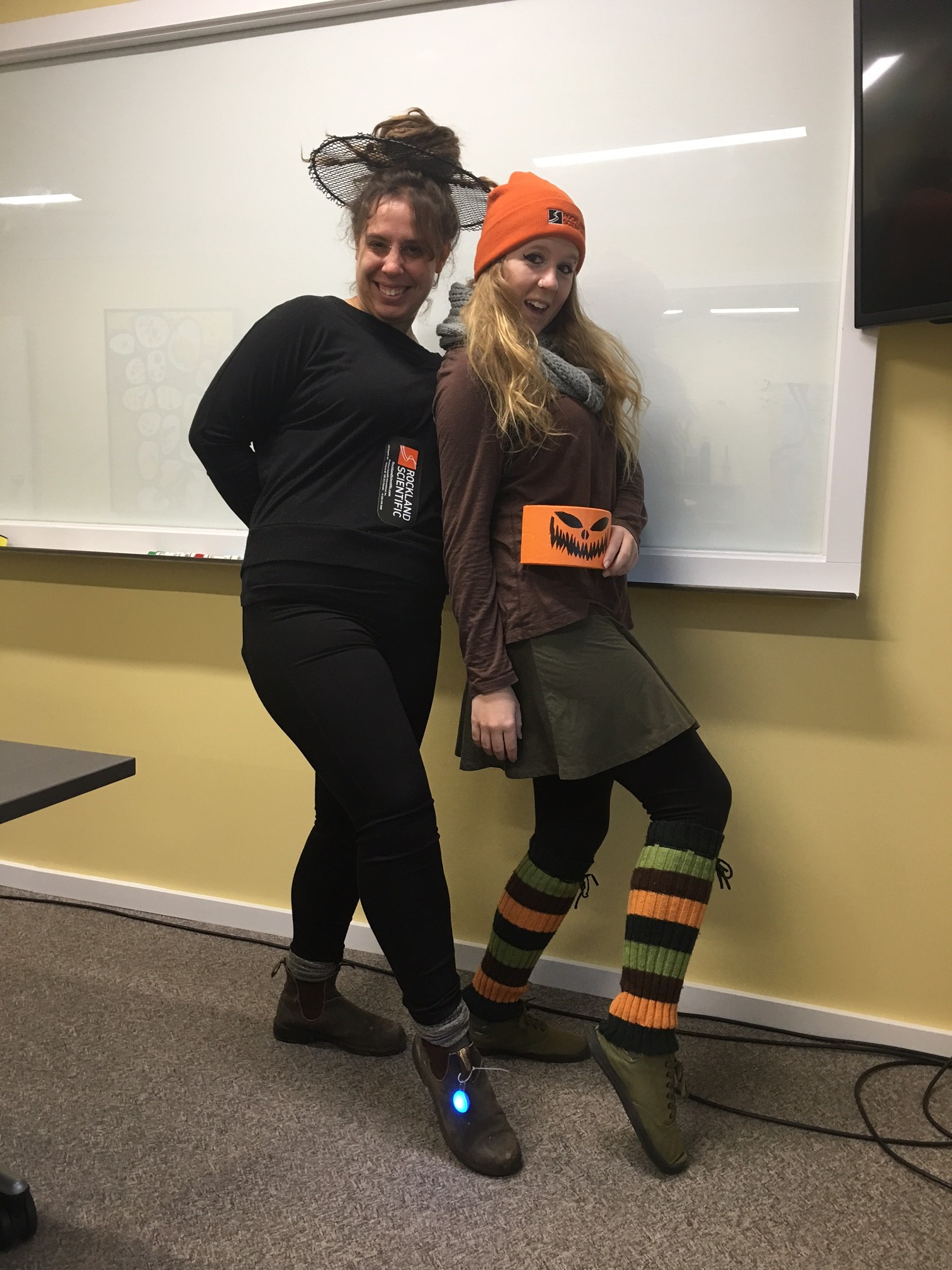
Happy Halloween from Rockland Scientific!

Emma is winning with her MicroCTD Turbulence Profiler costume. Do you want to learn more about our MicroCTD? Click here!

img_4355

VicTOR 2016 Success!

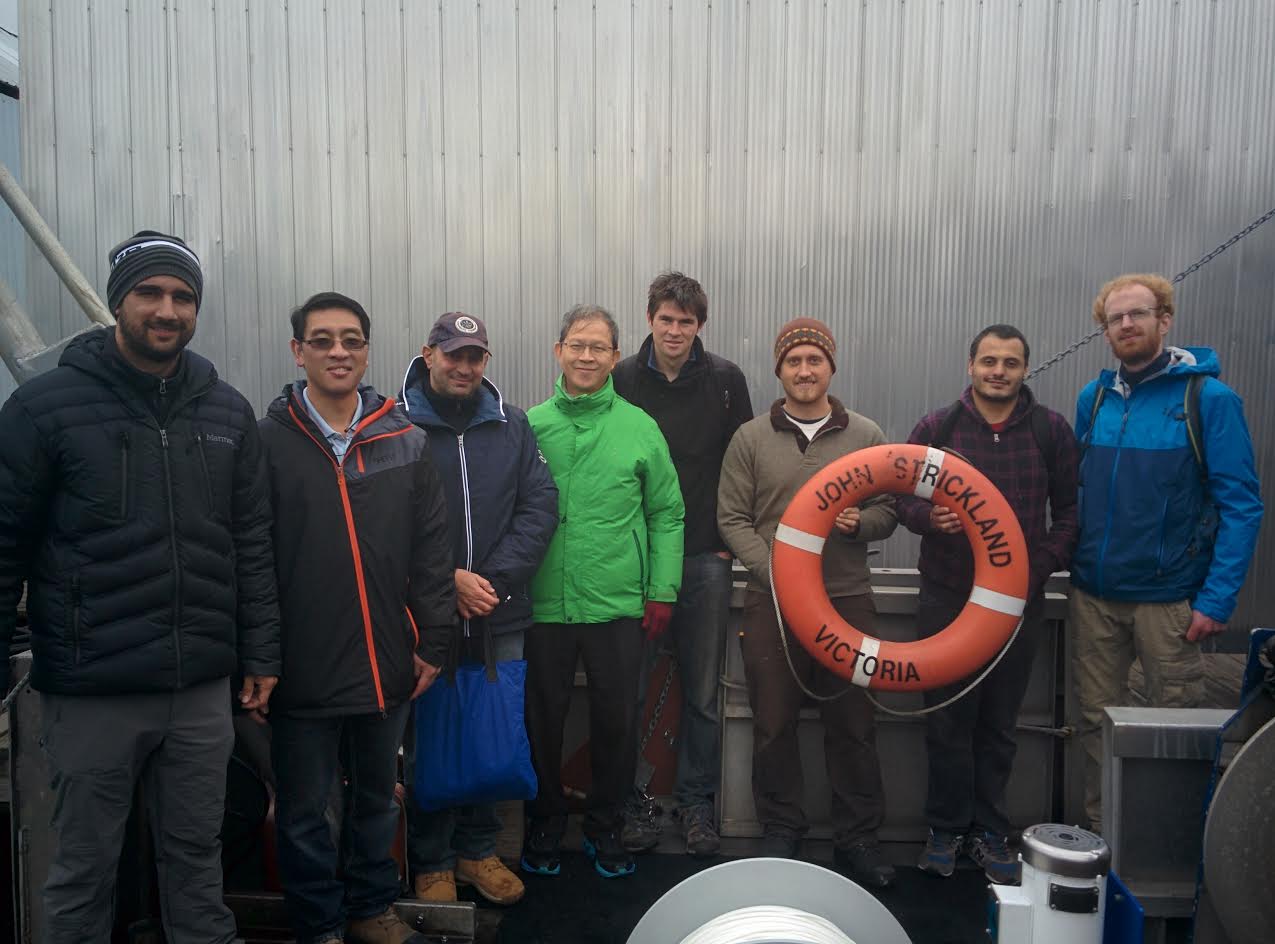
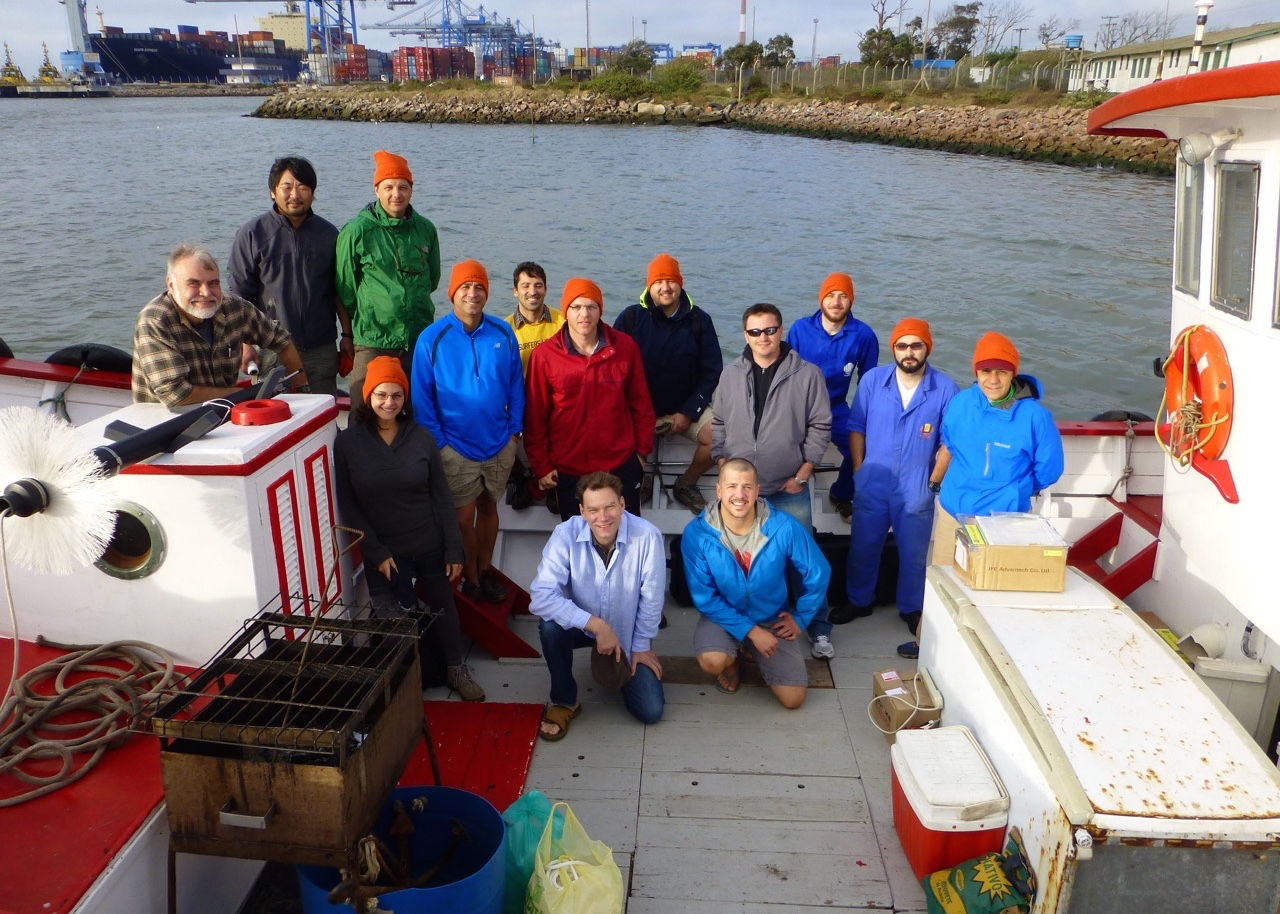
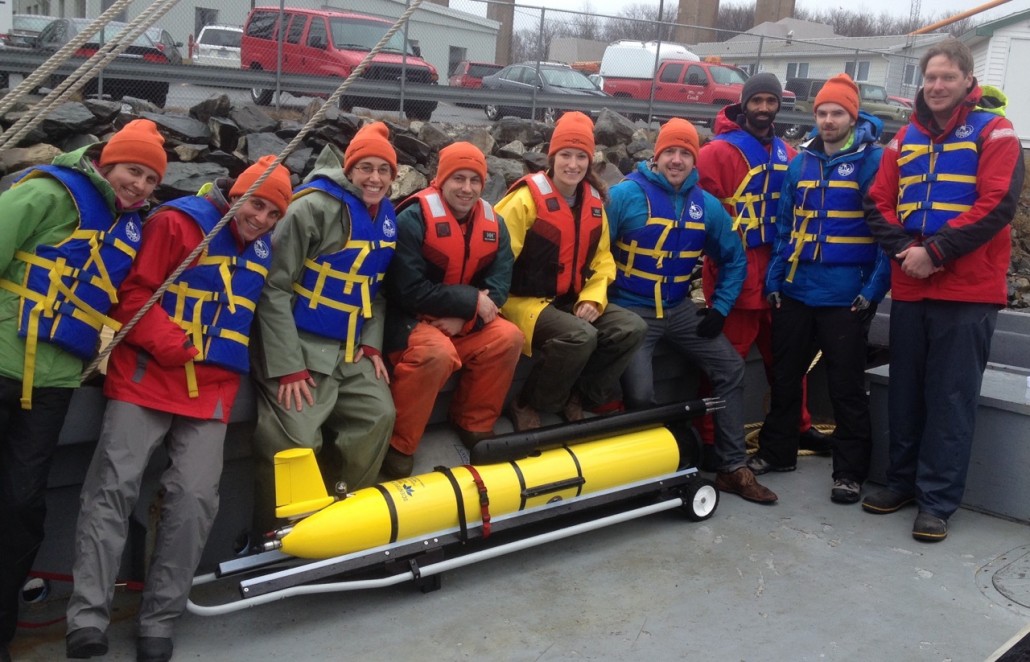
Thank you to everyone who attended VicTOR 2016. It was a successful week and we are happy to see so many people learning about ocean turbulence.

victor-2016-2victor-2016-1

Visitor’s Info Package for VicTOR 2016 Released

Only 2 weeks until VicTOR 2016!

Please find all the information in our VicTOR 2016 Information Package.

VicTOR 2016: Victoria Turbulence Observation Retreat

VicTOR 2016 builds on success of previous turbulence training workshops held around the world

The Victoria Turbulence Observation Retreat, “VicTOR 2016”, is a 5-day VMP training workshop that covers all aspects turbulence measurements using VMP profilers, from basic measurement theory, to the setup, operation, maintenance, deployment and processing of VMP turbulence data. The workshop is scheduled for October 17-21, 2016 in Victoria. Please see the VicTOR 2016 Syllabus for details. Seven spots remain at time of this publishing.


RSI-VicTOR2016-graphic-1_06

Announcement of Ocean Microstructure Glider (OMG) 2016 Training Program


OMG 2016 Picture


VICTORIA, CANADA, April 18, 2016 – Rockland Scientific Inc. (Rockland), Teledyne Webb Research (TWR) and their Spanish partner, INNOVA oceanografía litoral, are pleased to announce the inaugural Ocean Microstructure Glider Training Program (OMG 2016), scheduled for May 10 – 13th, 2016 at the “Marine Technological Service” (SITMA) within the University of Las Palmas de Gran Canaria.

The training course is concentrated on acquisition and analysis of microstructure turbulence measurements from the Slocum Ocean Microstructure Glider. This unique collaboration of Rockland Turbulence Scientists and TWR Glider Pilot Instructors results in a comprehensive Ocean Microstructure Glider programme spanning 3.5 days, with one day of this time dedicated to field measurements off the coast of Gran Canaria.

To ensure a limited number of trainees per instructor, spaces will be provided on a first-come, first-serve basis. Please visit the news section of the Rockland, TWR or INNOVA for the course syllabus and contact info@rocklandscientific.com for more information and registration details.

About Rockland Scientific

Rockland, located in Victoria, Canada, provides sensors and instrument systems for ocean turbulence measurements. The instruments are either ship-deployed profilers, moored systems, or deployed from autonomous gliders, floats, or AUVs. Rockland measurement systems are used worldwide in a multitude of disciplines, such as Climate Research, Renewable Ocean Energy, Coastal Management and Erosion Studies, and Fisheries Research.

About Teledyne Webb Research

TWR is a world leader in the design and manufacture of scientific instruments for oceanographic research and monitoring. Teledyne Webb Research specialises in three areas of ocean instrumentation: neutrally buoyant, autonomous drifters and profilers; autonomous underwater gliding vehicles; and moored underwater sound sources.

About INNOVA oceanografía litoral

INNOVA, founded in 1997 and headquartered in Barcelona, Spain, specializes in oceanographic services and supplies instrumentation for the measurement of ocean dynamics. INNOVA leverages its strong relationships with vendors such as Rockland and TWR to promote and organizes training seminars and courses, providing end-users in the Southern European with opportunities for hands-on exposure to the latest ocean technologies

Please see the OMG 2016 Training Overview for course outline and learning goals.

Rockland and Dalhousie University researchers combine to develop solutions for turbulence measurement at in-stream tidal power sites.

The need for improved knowledge of turbulence statistics in tidal energy generation has led to a trans-Canadian collaboration between British Columbia-based Rockland Scientific International and the Ocean Acoustics Laboratory (OAL) at Nova Scotia’s Dalhousie University to develop advanced techniques for turbulence measurements at turbine ‘hub height’.These new techniques will be traceable to a laboratory standard for turbulence measurement. Read More >>>

ENERGY–International Partnership Advances Nova Scotia’s Tidal Industry

Nova Scotia is advancing its leadership position in the tidal industry with two new international research grants.
The two projects, worth $1.43 million, will help governments, industry and researchers better understand the effect tidal technology has on the marine environment, and the impact of the marine environment on that technology.

This is the first announcement under the memorandum of understanding signed between the government, Offshore Energy Research Association and the United Kingdom.

“Canada and the United Kingdom are recognized leaders in marine renewable energy, and ongoing investments in tidal research spur innovation and development in both countries,” said Energy Minister Michel Samson. “These projects are an example of how partners from around the world are coming together to better understand the opportunity in our oceans and how to harness their power – safely, effectively, and in an environmentally responsible way.”

The projects have been selected for funding through a partnership between the Offshore Energy Research Association, a Nova Scotia based not-for-profit research group, and Innovate UK, a government-funded business and innovation organization.

“Collaboration is a critical element in fostering the growth and development of a global tidal energy industry,” said Stephen Dempsey, executive director, Offshore Energy Research Association. “The efforts of Innovate UK and the association in supporting these two important research projects will not only have lasting commercial benefits, but will also make important contributions in technical know-how, helping build this industry on both sides of the Atlantic.”

The first project is led by British Columbia-based Rockland Scientific, in partnership with Dalhousie University and Black Rock Tidal Power, along with United Kingdom-based FloWave TT, European Marine Energy Centre, and Ocean Array Systems.

Research partners will develop new sensor systems to measure turbulence, which allows developers to design and deploy technology that performs better in strong tides and currents.

The research will be carried out in both Canadian and United Kingdom waters, including at the Fundy Ocean Research Center for Energy in the Bay of Fundy. Testing will also be conducted at the University of Edinburgh’s FloWave Ocean Energy Research Facility and at the European Marine Energy Centre in Scotland’s Orkney Islands.

This is the first EUREKA-designated research project carried out in Nova Scotia.

“Innovate UK is pleased to be working alongside Offshore Energy Research Association on this effort, as it sees Nova Scotia as a growing and large potential market for tidal energy, making this a good opportunity for United Kingdom companies to gain exposure to that market,” said Rob Saunders, head of energy, Innovate UK. “We believe that faster progress will be made by combining the expertise, knowledge and experience to tackle common problems.”

The second project is led by Nova Scotia-based Emera Inc. in partnership with OpenHydro Canada, Ocean Sonics, and Acadia University, along with United Kingdom-based Tritech, Sea Mammal Research Unit’s United Kingdom and Sea Mammal Research Unit Consulting Canada. This project will improve the tracking of fish and marine mammals in the Bay of Fundy.

The system will be used at the Cape Sharp Tidal berth at the Fundy Ocean Research Center for Energy, gathering information to assess the impact of its turbine on marine life.

Offshore Energy Research Association’s investment of $500,000 represents Nova Scotia’s contribution to these projects.

Innovate UK is contributing $331,000, with remaining funding being provided by federal government agencies and private industry in both Canada and the United Kingdom.

More information is available at www.oera.ca

VMP-250 hands-on demonstration at Ocean Business 2015

Rockland is hosting a hands-on demonstration of the VMP-250 microstructure turbulence profiler as part of Ocean Business 2015, NOC Southampton. This course is free to attend, but registration is required on the Ocean Business 2015 website.

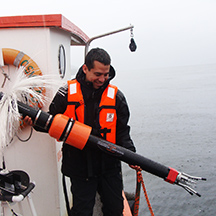
The demonstration will be in two parts: a 1-hour field demonstration and a 1-hour classroom session. VMP-250 Carlos_sm

Wednesday, April 15, 1:30 – 2:30 PM: Field demonstration with the VMP-250 in Southampton waters aboard the R/V Bill Conway.

Thursday, April 16, 9:00 AM – 10:00 AM: Step-by-step processing analysis of microstructure turbulence data collected during the field demo.

Space is limited to 10 participants. To reserve your spot now, contact Jeremy @ rocklandscientific.com

Rockland Scientific and FloWaveTT join forces to improve understanding of tidal turbulence

FloWave and Rockland Scientific join forces to improve understanding of tidal turbulence
Agreement paves way for broader collaboration on measuring turbulence ‘from the lab to the ocean’
(Official News Release – 02 June 2015)
Two of the leading organisations in ocean energy research have pledged to work together to measure and understand the impact of turbulence on wave and tidal energy devices.
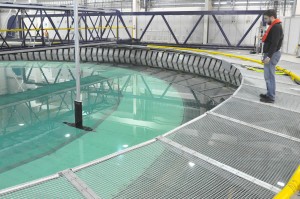
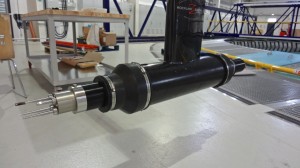
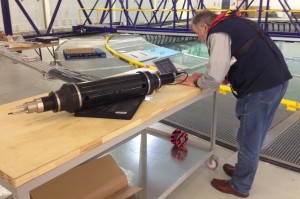
FloWave Ocean Energy Research Facility at Edinburgh University and Canadian marine turbulence specialists Rockland Scientific will work together to develop tank-scale turbulence measurement technology, which can also be deployed at sea, on both sides of the Atlantic.

Flowave newsThe two firms – which already completed a first round of technology testing in 2014 – announced the collaboration agreement at FloWave today [Tuesday June 2] during an ocean energy trade mission from Nova Scotia organised by Scottish Development International, the international arm of Scottish Enterprise and the Nova Scotia Department of Energy.

flowave news2The mission brings together developers, supply chain companies and R&D organisations from Scotland and Canada, with the aim of encouraging and supporting closer trans-Atlantic collaboration on marine renewable energy technologies and projects.

“The accurate measurement and understanding turbulence, and particularly its impact on structures and performance, is a vital part of designing and deploying any wave or tidal technology”, says FloWave Chief Executive Officer Stuart Brown.

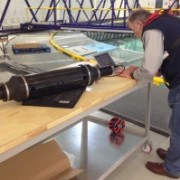
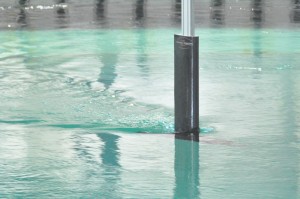
“To date, the techniques for measuring turbulence in the laboratory have been very different to those adopted at sea, making like-for-like comparisons from one environment to the other more difficult. At FloWave we have already completed valuable turbulence characterisation work with Rockland Scientific – specifically bringing their ocean-going instrument into the laboratory at FloWave back in 2014.

“This new agreement allows the partners to build on that pioneering work to deliver transferable turbulence measurement solutions that enable all parties to dramatically improve their understanding of turbulence in fast tidal currents. That this translates across the scales from test tank model scale to full scale installations in the real environment directly addresses industry challenges such as device design for performance and reliability, accurate energy yield prediction for individual devices and the optimization of array project layouts; all of which are key parameters for the technical and flowave news3commercial feasibility of tidal energy conversion projects,” Brown concludes

Commenting on the agreement Rockland Scientific Business Development Director Jeremy Hancyk said:

“The 2014 proof-of-concept demonstration of Rockland Scientific’s field instrumentation in the FloWave tidal tank was just the beginning. This formal collaboration agreement with FloWave, supported by Innovate UK and Canadian funding agencies, leverages our complementary expertise to accelerate the further development of Rockland Scientific’s turbulence measurement technology to smaller footprint, higher spatial resolution laboratory installations.”

Commenting on the collaboration John McGinnes from SDI said:

“Scotland and Canada are both making tremendous strides towards the commercialisation of tidal energy technologies and this trade mission is helping to bring both sides of the Atlantic get together to address sectoral challenges and drive the industry forward. We look forward to more collaborations between Canadian and Scottish companies in the future.”

flowave news4